
How to Choose the Right Shoes for Running Outside

Over 50 million Americans will lace up their sneakers and jog this year, and that number continues to grow. As participation in 5k, ½ marathons, and full marathons grows as well, it’s important to know what’s on your feet and how it may contribute to your overall well-being.
Even if you’re not a competitor and a more casual jogger (respondents also said they run for their health, stress relief, and enjoyment), footwear matters.
At CORE Orthopedics, we take choosing the right running shoe for you and your needs seriously. That’s why we’ve put together a few guidelines to remember when you start looking for your next pair.
What Style of Running Shoe is Best for Me?
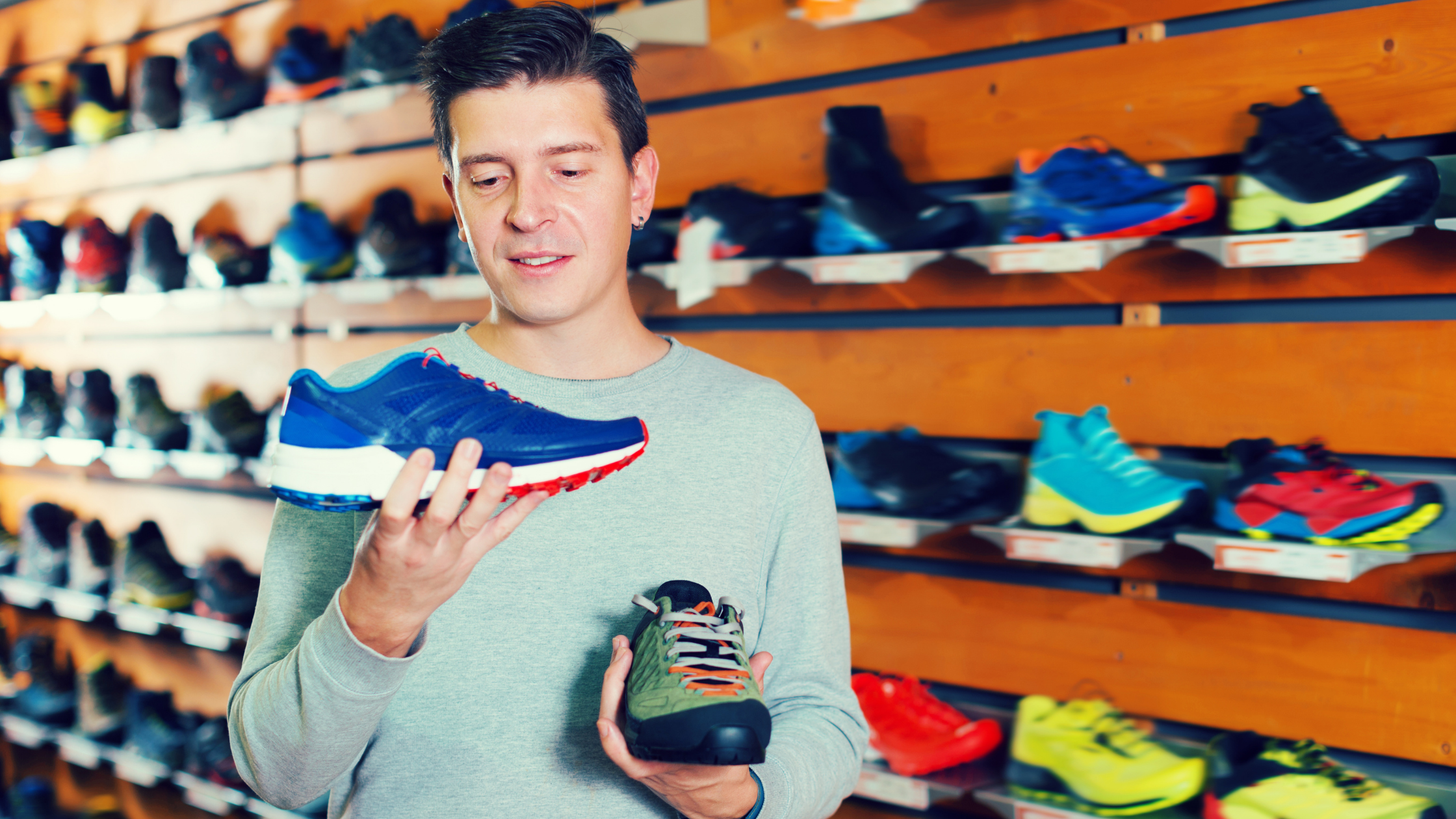
While they may look like any other pair of sneakers, the best shoes for running outside are designed to help you run at your best while avoiding injury. This includes cushioning for shock absorption and proper stability control.
But when you find yourself in the sneaker section at your local sporting goods store, navigating the world of running shoes can feel overwhelming. In fact, a simple search for “outdoor running shoes” and “best running shoes for outdoors” yields over 75,000,000 results each on Google.
Before you even walk into a store, take the time to figure out which kind of shoe is right for you.
There are four main types of running shoes you’ll encounter:
Everyday Running Shoes
These are the most versatile running shoes. They can be used as daily trainers and to log miles. They’re made with materials designed to handle regular running, and some include extra comfort-focused features such as extra cushioning. If you’re new to running, these are the ones to look for.
Lightweight Running Shoes
These are less durable than everyday running shoes but are better for fast workouts or races. As the name implies, they are lighter in weight and tend to have less material under the foot.
Lightweight running shoes are best used once or twice weekly or for races by experienced runners. If you’re a new runner, you shouldn’t wear these more than three days per week for 45 minutes at a time.
Racing Shoes
Racing shoes have little to no cushioning and no excess fabric to make running fast the priority rather than long runs. These are generally the least durable type of running shoe and should be used primarily in competition.
Trail Running Shoes
If you plan to hit the dirt instead of the pavement, a trail shoe is your best bet. These are made for running on dirt and rough terrain and have lugs on the bottom to provide a better grip.
Updates in Running Shoe Technology
One of the most radical changes in the shoe industry is that commercial shoe manufacturers now have the ability to print 3D sneakers at a larger scale.
This means creating and developing more custom-made shoes cheaper and more quickly than ever before is possible.
A group of researchers and scientists at MIT took this information and developed a new model “that can simulate how a runner’s gait changes with different shoe types.” From there, you can choose the shoe that performs best for your feet.
This technology is still being developed, so don’t expect to see it at your local running store.
Thanks to lighter foam, running shoes are becoming even lighter. This RunRepeat guide provides a more detailed look at the many different types of running shoe foams available.
Another new development is the addition of carbon-fiber plates. These plates are sewn into the midsole foam that aims to help drive the runner forward. Because of this, runners experience better efficiency and faster times.
Despite all of the new technology, what remains most important is how your running shoes fit.
Understand Your Foot’s Pronation and How it Affects Your Gait
When shopping for a new pair of running shoes, it’s crucial to consider your pronation (the way your foot rolls from heel to toe with every step).
According to Runner’s World, normal pronation sees the foot roll inward about 15% and come in complete contact with the ground while supporting your body weight without an issue. This ensures proper shock absorption and gait while reducing the stress of impact.
Knowing your pronation will help you to choose the proper shoe and avoid injury. There are four types of pronation: severe overpronation, mild overpronation, neutral, and supination (also known as underpronation).

Severe Overpronation
Heel strikes first, then the foot rolls inward excessively. Associated with flat feet or extremely low arches.

Mild Overpronation
Heel strikes first, then the foot rolls inward slightly to absorb the shock. Associated with medium arches.

Neutral
Middle or slightly outward part of the heel strikes first, then the foot rolls inward slightly. Associated with medium arches.

Supination (Underpronation)
Outside of the heel strikes first, but the strike continues along the outside of the foot strike rather than rolling inward. Associated with high arches.
Use Your Pronation To Determine The Type Of Shoe You Need

Not all running shoes are created equal, especially for different types of gaits.
Motion-control shoes are known for their wide, straight shape across the bottom of the shoe. These are best for runners with flat feet or those who overpronate, as they prevent your foot from rolling too far inward while providing maximum support and control.
Stability shoes have a semi-curved shape to provide more cushion and support for the foot. Runners with mild overpronation should choose stability shoes.
Neutral cushioning shoes feature a curved shape to help absorb the impact for feet with neutral or underpronation. These shoes are for you if you have a high arch, neutral pronation, or underpronation.
Try On Running Shoes The Correct Way
Unlike other types of shoes, there’s a particular way you should go about trying on running shoes to ensure the best fit.
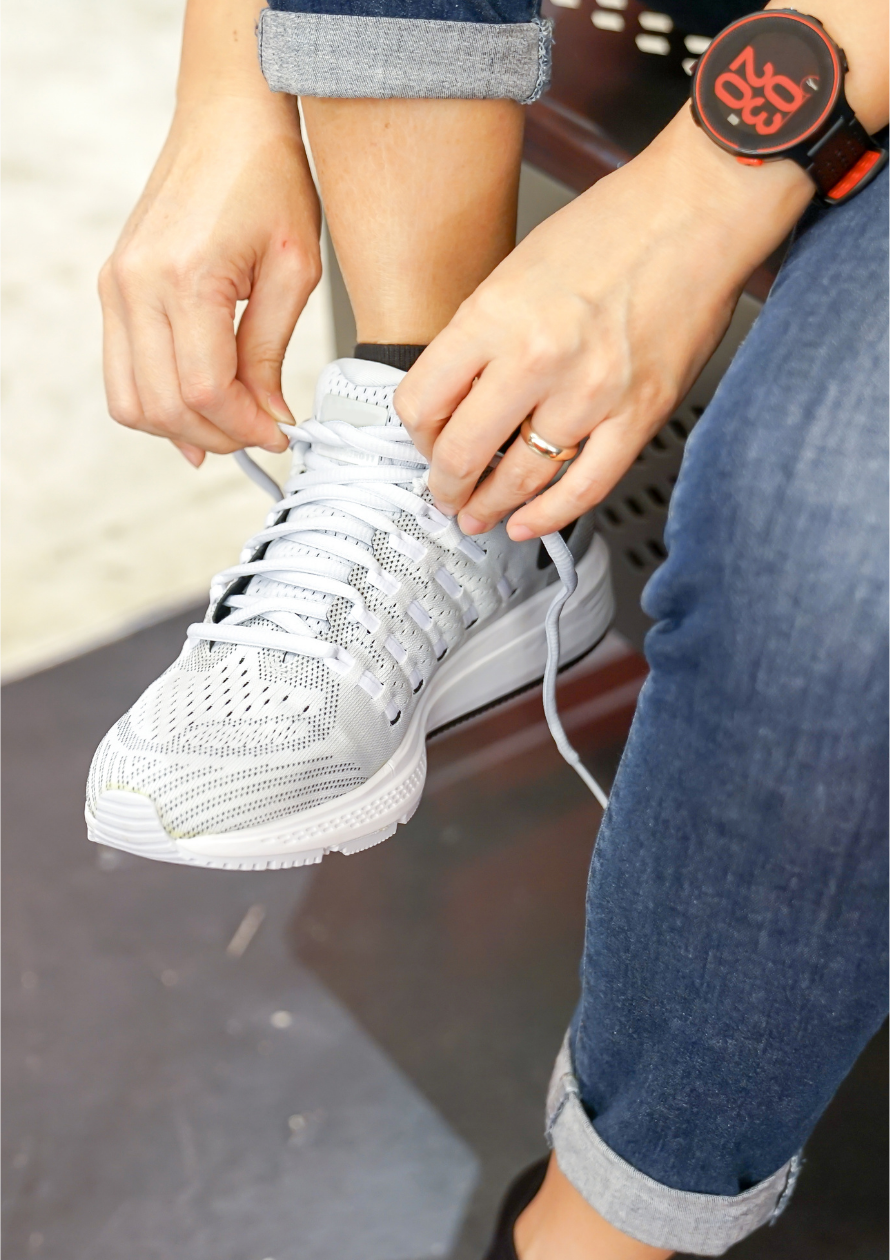
First and foremost, it’s important to wait until the end of the day or evening to try them on. Doing so will give you the most reliable feel, as your feet tend to swell throughout the day as they would on a run. In addition, be sure to wear the same gear you would typically wear on a run, including socks and braces, for the most accurate fit.
If you’re new to the world of running shoes, there are a few things to look for in how a pair fits.
Above all, your foot should sit comfortably in the shoe. The foot should be in the center of the shoe’s platform without being pinched or sliding. Keep in mind that shoe width could affect this.
To accommodate any swelling during your run, leave about a thumb’s width between your foot and the end of the shoe.
When shopping for a new pair of running shoes, you might experience a little sticker shock: High-quality running shoes can range from $100 to $250. However, most runners can get what they need in a pair that costs $110-$150.
Know When To Replace Your Running Shoes
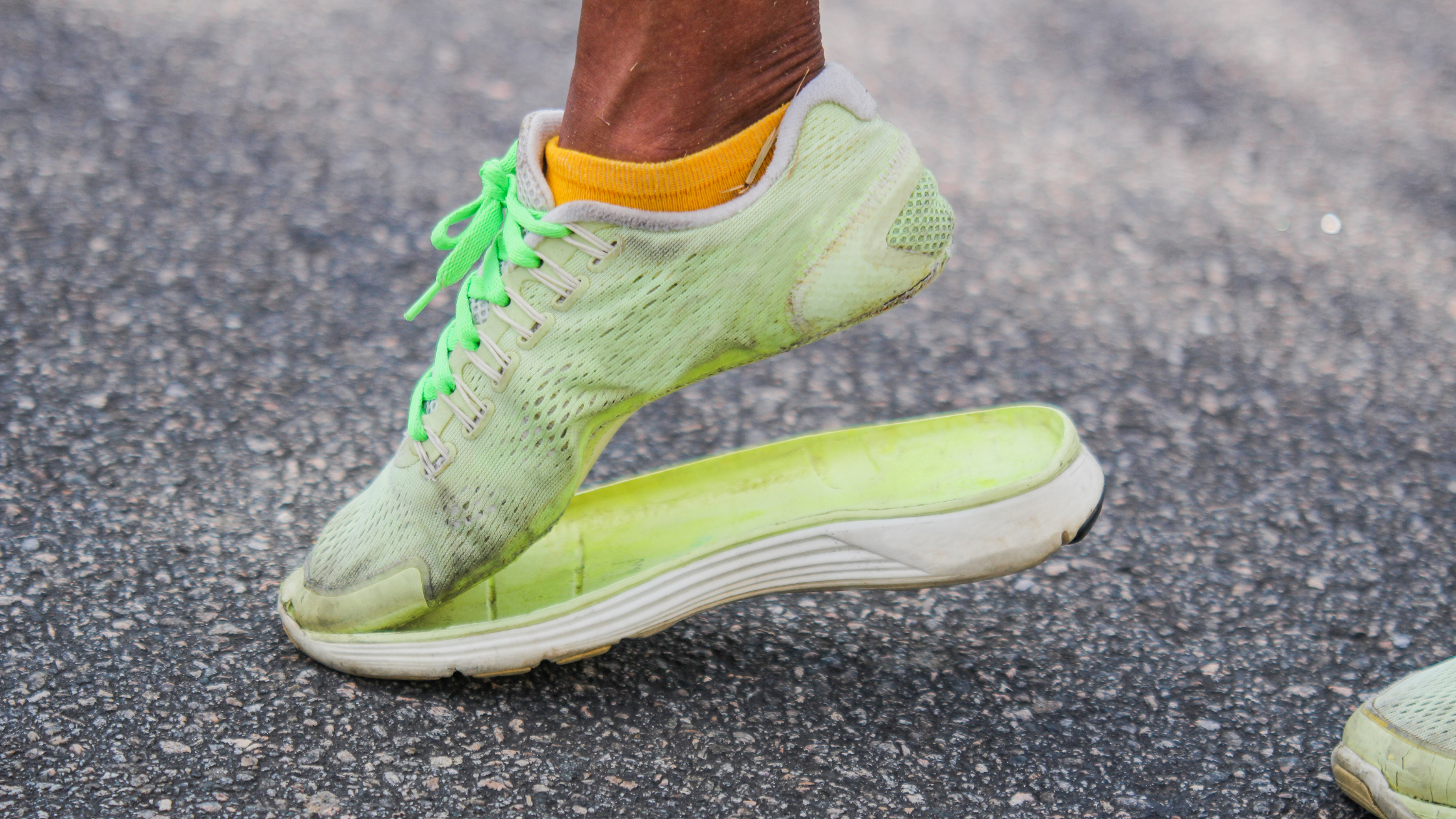
Unfortunately, running shoes can’t last forever (but that doesn’t mean you can’t keep them on hand for everyday tasks like walking the dog).
Typically, runners should replace their shoes every 300 to 600 miles. Depending on how often and far you run, this could be once a quarter or twice a year.
If you don’t log your miles, don’t panic. A few signs to look out for will let you know it’s time: the shoes may begin to fit differently, show visible signs of wear, including a wrinkled midsole or the treads are worn down.
It’s crucial that you replace your shoes soon after you start to notice these changes. If you don’t, stress and impact on your legs can increase, leading to aches, pains, and an increased risk of injuries.
Feeling Pain While Running? Call CORE Orthopedics Today.
If you experience any abnormal pains or overuse injuries during your running journey, including in the knees and hips, schedule an appointment with the doctors at CORE Orthopedics today to discuss your options.

Location Information


Surgical Affiliations

Geneva Surgical Suites
119 Elizabeth Ln., Genoa City, WI 53128
Phone: 262-295-1213
Alexian Brothers Medical Center
800 Biesterfield Rd.
Elk Grove Village, IL 60007
Phone: 847-437-5500
St. Alexius Medical Center
1555 Barrington Rd.
Hoffman Estates, IL 60169
Phone: 847-843-2000
Advocate Good Shepherd Hospital
450 West Highway 22
Barrington, IL 60010
Phone: 847-381-0123